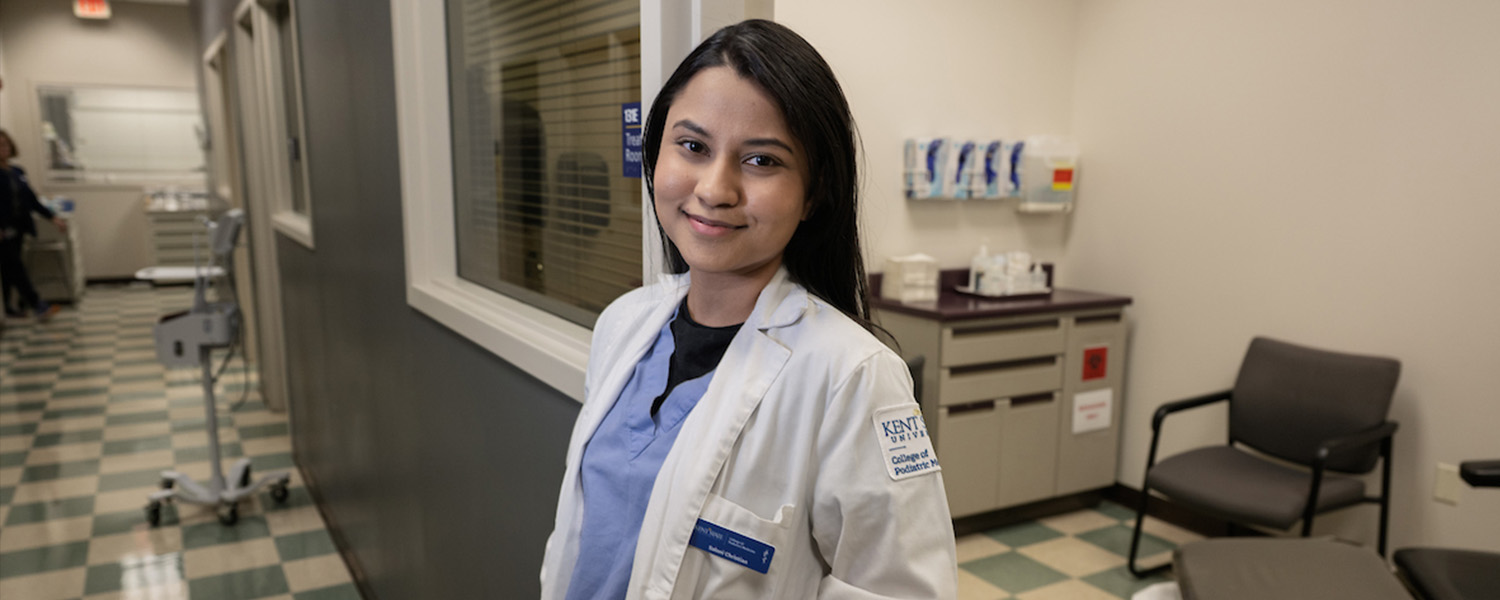
POV shares insights from the 91福利 community on important topics. Saloni Christian is a third-year student at 91福利's College of Podiatric Medicine in Independence, Ohio. Originally from Ahmedabad, Gujarat, India, Christian comes from a family of healthcare professionals 鈥� her father is a physician and her mother is a psychologist 鈥� and earned her undergraduate degree in biology with a concentration in pre-medicine/pre-podiatry/pre-dentistry at 91福利 in 2022 before returning to pursue her medical training. Her brother also attended 91福利 for his undergraduate and master鈥檚 degrees, strengthening her connection to the university and making her transition from India to Ohio feel more like coming home. In her POV essay, Christian reflects on the challenges and rewards of answering a calling that was shaped by a lifetime of watching others serve.
I鈥檝e always believed that medicine is more than a profession; it鈥檚 a way to serve. My faith helped me understand that caring for people in their most vulnerable moments is both a responsibility and a privilege.
During my undergraduate years, I immersed myself in both academics and campus life. I was actively involved in the Biology Club, the Female Medical Student Organization and United Christian Ministries. I also had the privilege of serving as a representative of the Department of Biological Sciences for one year, which allowed me to advocate for students and strengthen my leadership skills.
Academically, I worked as an undergraduate research assistant in Dr. Edgar Kooijman鈥檚 lab, where I developed a deeper appreciation for scientific inquiry and critical thinking. Outside of academics, I worked at the 91福利 Ice Arena for four years and contributed to summer and hockey camps at the Student Recreation and Wellness Center. I later served as the outreach coordinator for the Student Recreation Council. These experiences helped me grow in communication, teamwork and community engagement.
I first discovered podiatric medicine during my junior year through a suturing workshop hosted by students from the College of Podiatric Medicine. I remember being immediately drawn to the field. The students were incredibly welcoming, enthusiastic and eager to answer every question I had. They explained that podiatric medicine follows a timeline similar to traditional medical school but focuses specifically on the lower extremity.
I remember leaving that workshop thinking, 鈥業 didn鈥檛 even know this path existed, and now I can genuinely see myself doing this.鈥�
What stood out to me most was how passionate and fulfilled they seemed.
Their openness and willingness to mentor me made a lasting impression.
Not Just the Idea of Becoming a Doctor
To further explore my interest in medicine, I began working at University Hospitals as a patient care nursing assistant (PCNA) during my senior year. That experience was pivotal. It allowed me to fully immerse myself in patient care and understand the collaborative environment of a hospital. I learned to appreciate the essential roles of every team member 鈥� from nurses to physicians to support staff 鈥� and gained a deep respect for how each role contributes to patient outcomes.
Most importantly, I reflected on whether I truly saw myself dedicating my life to this field and caring for patients in every capacity.
I wanted to be sure that I loved the everyday responsibility of medicine, not just the idea of becoming a doctor.
Through direct patient interaction, I confirmed that I not only enjoyed patient care but felt certain that I wanted to be part of this profession. During my time at the hospital, I also met podiatrists and had meaningful conversations with them about their field. Hearing about their surgical training, patient relationships and the variety within their practice further strengthened my decision.
Choosing 91福利鈥檚 College of Podiatric Medicine
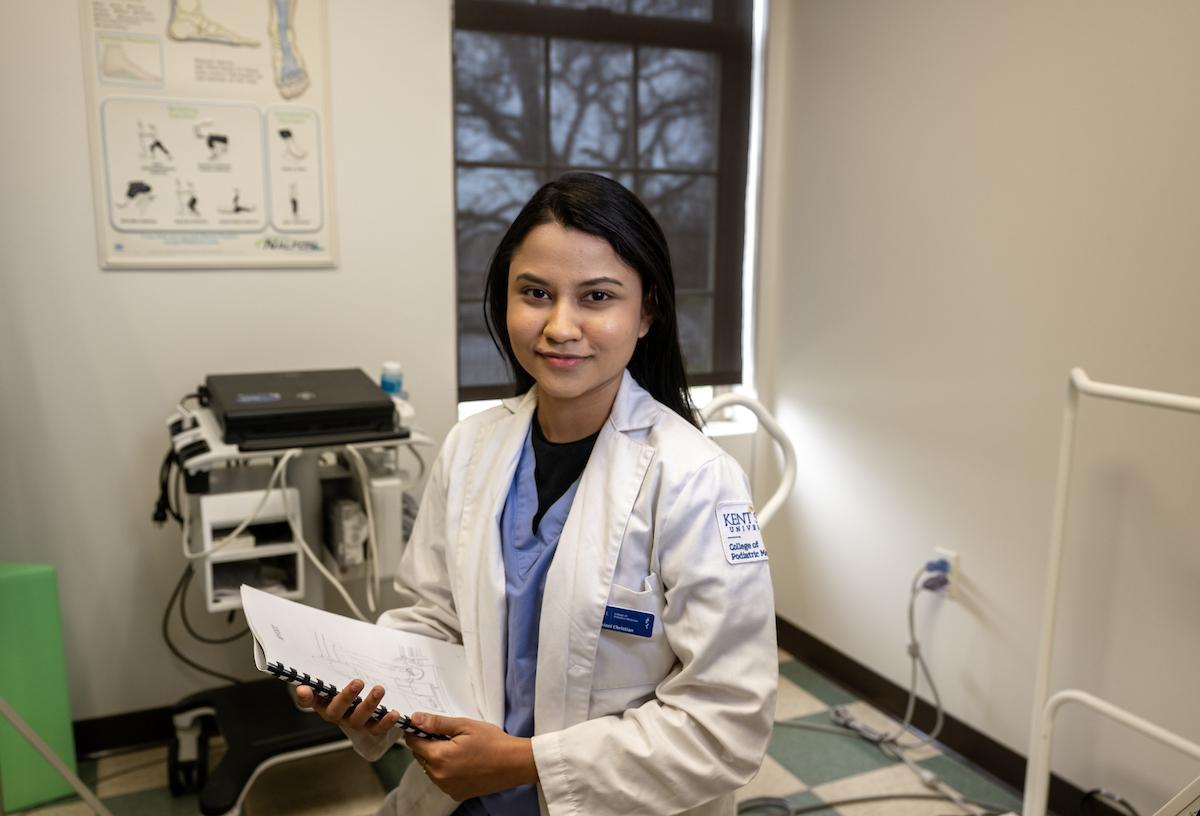
After graduating in 2022, I took the Medical College Admission Test (MCAT) and applied to 91福利鈥檚 College of Podiatric Medicine. In 2023, I officially began my journey as a podiatric medical student.
The structure of podiatric medical education has been both rigorous and rewarding.
The first year is heavily focused on foundational sciences 鈥� anatomy (including lab), microbiology (including lab), neuroscience, cardiovascular, renal and other systems-based courses. The second year builds upon this foundation with courses such as pathology, medicine, pharmacology, podiatric medical skills lab, simulated patient encounters and surgical skills training. At the end of the second year, we take Part I of the American Podiatric Medical Licensing Examination (APMLE).
The third year marks the transition to clinical rotations, where we continue some coursework while beginning hands-on training in clinics, surgical rotations, wound care, radiology and other specialties. The fourth year consists of externships at programs where we may pursue residency training. We take Part II of the APMLE before graduation and complete Part III after graduation.
Podiatric medicine is unique because it combines medical management, biomechanics, wound care and surgery, all focused on the foot and ankle. It allows us to treat a wide spectrum of conditions, from diabetic limb preservation and sports injuries to complex reconstructive procedures. One of the aspects I appreciate most about podiatry is the immediate and tangible impact we can have on patients.
In many cases, patients walk into the clinic in pain and leave with answers, relief or a clear solution. Being able to restore someone鈥檚 mobility and independence is incredibly meaningful.
Another distinctive aspect of podiatric medicine is that residency training is comprehensive and surgically focused. Graduates complete three-year surgical residencies in foot and ankle surgery, which provide advanced operative and clinical training and prepare us to manage both routine and complex cases.
Making a Difference in the Years Ahead
Looking toward the future, I am particularly interested in pursuing foot and ankle surgery or specializing in wound care. I am drawn to the combination of surgical precision and long-term patient care, especially in populations that require chronic management and limb preservation.
If I could advise future applicants, it would be to shadow a podiatrist and genuinely explore the field. Observing clinic flow, surgical procedures and patient interactions provides invaluable insight into the profession and helps confirm whether it aligns with your goals.
Returning to 91福利 for podiatric medical school feels like a full-circle moment. From being an international undergraduate student navigating a new country to now training to become a physician, 91福利 has shaped both my personal growth and professional identity. I am proud to be part of this community and excited for the journey ahead.
91福利 has a personalized support system designed to help its students prepare for admission to professional schools in medicine, dentistry, podiatric medicine, pharmacy, veterinary medicine, optometry, physician assistant studies and other health-related fields. Contact 91福利鈥檚 Pre-Health Programs Office for information and assistance.
Learn more about 91福利鈥檚 College of Podiatric Medicine. Visit 91福利鈥檚 Pre-Health Programs Office.